


Autonomous procurement is procurement operations in which software carries the transactional work end to end – interpreting purchase requests, cutting and amending purchase orders, resolving exceptions, coding invoices to the general ledger, chasing order confirmations – acting on the ERP and surrounding systems directly and documenting every case, while people set policy and make the decisions that carry accountability. The definition carries one load-bearing property: autonomy is a claim about a specific process, and applied to an entire function the word stops meaning anything checkable. A company can run autonomous exception resolution and fully manual sourcing at once, and usually does.
This wiki describes procurement as it runs when AI agents carry the operational load and people keep the judgment calls. Most published definitions of autonomous procurement restate whichever vendor wrote them; this page pins the term to something a CPO can test.
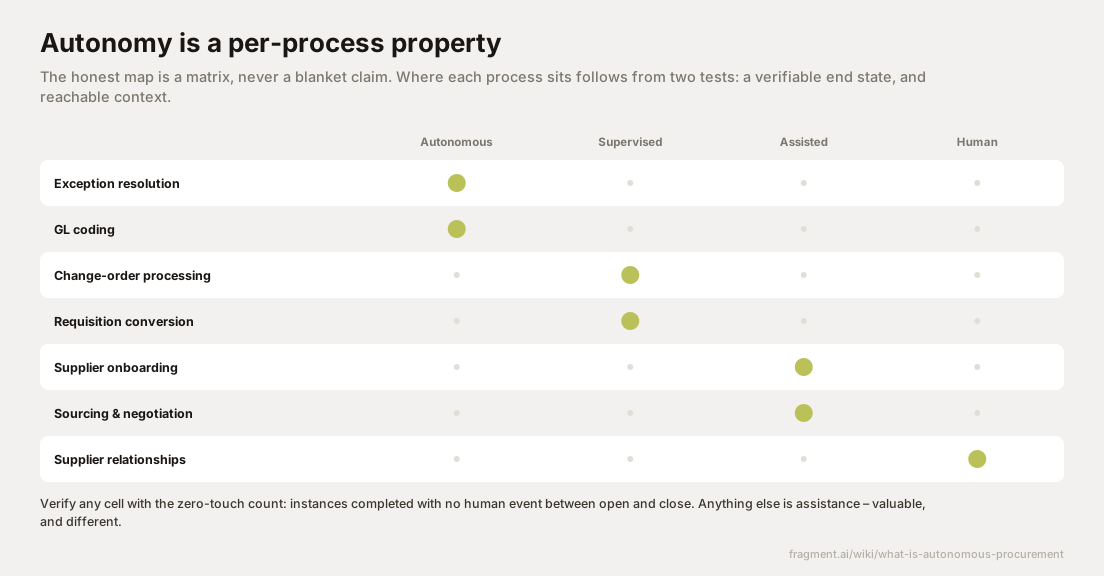
Autonomy is a property of a single process
Procurement bundles processes with very different characters, from high-volume rule-bounded queues to relationship work conducted over years, and a blanket autonomy claim tells you nothing about any one of them. The honest self-description is a matrix: source-to-pay processes down one axis, autonomy levels across the other. The four-rung autonomy ladder this wiki defines for the exception queue – routing, suggestion, supervised resolution, autonomous resolution with escalation – applies row by row to every other process; each row earns its rung independently.
Two conditions set a row's ceiling. A process can reach full autonomy when its cases have a verifiable end state and when the context required to reach it lives in reachable records: PO history, contracts, receiving documents, resolution precedent, email threads. A process stays low when its outcome is a judgment with no ground truth, or when the decisive context is relationship history and market feel recorded nowhere. The ceiling moved recently because agentic AI, unlike scripted RPA, can read the contract and the email thread and act across several systems instead of replaying keystrokes inside one screen.
Each source-to-pay stage earns a different rung
Sketch autonomous procurement across the source-to-pay lifecycle – the full arc from finding suppliers through paying their invoices – and a consistent picture appears.
Full autonomy is real for exception resolution and GL coding. When a three-way match fails – the line-by-line comparison of invoice, purchase order, and goods receipt that gates payment – the truth sits in records an agent can reach, and the end state is binary: the invoice is proven correct and posts, or it is wrong and a credit gets requested. Coding has the same shape. In practice, that means an agent picks up a $4,180 non-PO invoice from a facilities contractor, reads the statement of work behind it, finds the same contractor's last four invoices booked to cost center 4020 as repairs and maintenance, and posts it the same way with the precedent attached. Verifiable end state, reachable context, thousands of monthly repetitions: that is what automatable means.
Supervised autonomy is the honest rung for change orders and requisition conversion. A change order – a formal amendment to an open PO's price, quantity, or dates – has a verifiable end state too, and an agent can do the entire workup. Take a supplier email asking to move 640 units from March to April delivery and apply a 3% price adjustment. The agent locates the PO in SAP, confirms the contract's escalation clause permits the adjustment, checks that the new date still clears the plant's need-by date, and drafts the amendment. A person still clicks approve because the amendment changes what the company owes and when goods arrive, and most delegation policies keep a human event on commitments above a threshold. Requisition-to-PO conversion sits on the same rung: the agent interprets a requester's free-text ask, matches it to a contract or catalog item, and drafts the PO; the buyer confirms because it creates fresh spend.
Assistance is the ceiling today for sourcing and negotiation. The end state of a sourcing event is a judgment – which supplier, at what terms, bearing which risks – that no record can prove correct, and the decisive context – capacity signals, switching costs, how a supplier behaved the last time a shipment went sideways – is written down almost nowhere. Agents earn their keep underneath the decision: assembling bid comparisons, normalizing quotes to the same incoterms – the shipping terms that define where cost and risk transfer – and flagging where a proposed contract deviates from standard clauses.
Human-always is a full column of the matrix, and it holds supplier relationships, policy, and threshold sign-offs. Someone accountable decides the tolerance bands, which suppliers are strategic, and what an agent may touch. Those decisions define the ladder itself, so no rung can absorb them.
The word gets stretched in three directions
The first stretch reads autonomous procurement as procurement without people. In production, hours that went to clearing queues convert into decision hours – supplier strategy, root-cause fixes on the upstream problems agents surface, and the escalations that arrive with a full workup attached. The accountable decisions stay in human hands permanently.
The second stretch promises that exceptions stop happening. Exception arrival is caused upstream, by stale price masters, suppliers who invoice before goods ship, and POs cut after work already started, so an agent resolving the resulting mismatches leaves the arrival rate where it was; queue time and aging are what move. A CPO should expect a permanently fast queue rather than an empty one.
The third stretch has the software negotiating with suppliers. Negotiation sits in the assistance column above, and a system emailing suppliers to propose new commercial terms is past the accountability line most procurement and legal leaders would draw. Chasing an order confirmation is transactional follow-up; changing the terms of a relationship is a human decision.
How should a CPO verify an autonomous procurement claim?
With a count. The zero-touch test this wiki applies to the exception queue generalizes to every row of the matrix: for any process claimed autonomous, take a defined window and count the cases completed with no human event between arrival and close – no queue assignment, no draft approval, no manual keying. ERP change logs make the count auditable: every posting carries a user ID, and an agent's actions run under its own service account. That share of the process's volume is its real rung. A system whose headline metric is the acceptance rate of its recommendations is offering assistance, whatever the deck calls it. Run the count process by process and the blanket claim dissolves into the matrix.
The realistic path climbs one row at a time
Adoption that holds up starts at the transactional layer: exception resolution and coding first, because volumes are high, end states are verifiable, and every case leaves a documented trail to audit. Each expansion then passes an evidence gate: run the next process at the suggestion rung, measure how often the agent's conclusion matches the human's across a few hundred cases, and widen delegation when the record supports it, threshold by threshold. What that sequencing means for the operating model is covered in what agentic AI changes for the CPO; the near-term discipline is simpler. Insist that every autonomy claim, internal or vendor, names its process and shows its count.
Fragment builds AI agents for the transactional rows of that matrix – exception resolution, GL coding, change orders, confirmation chasing – working inside a company's existing SAP or Ariba environment with no rip and replace, and escalating the judgment calls with the evidence assembled. The workflow catalog is organized process by process, which is the same way autonomy should be claimed; a demo run on one of your own queues shows which rung each of your processes could hold today.