Roelof Botha and Jack Dorsey just published a piece about Block's reorganization. The core thesis is that hierarchy exists to route information. When AI can carry the context instead, you don't need the layers. It's a compelling framework for internal org design and one I’ve been thinking about since AI agents started contributing meaningful value to enterprises.
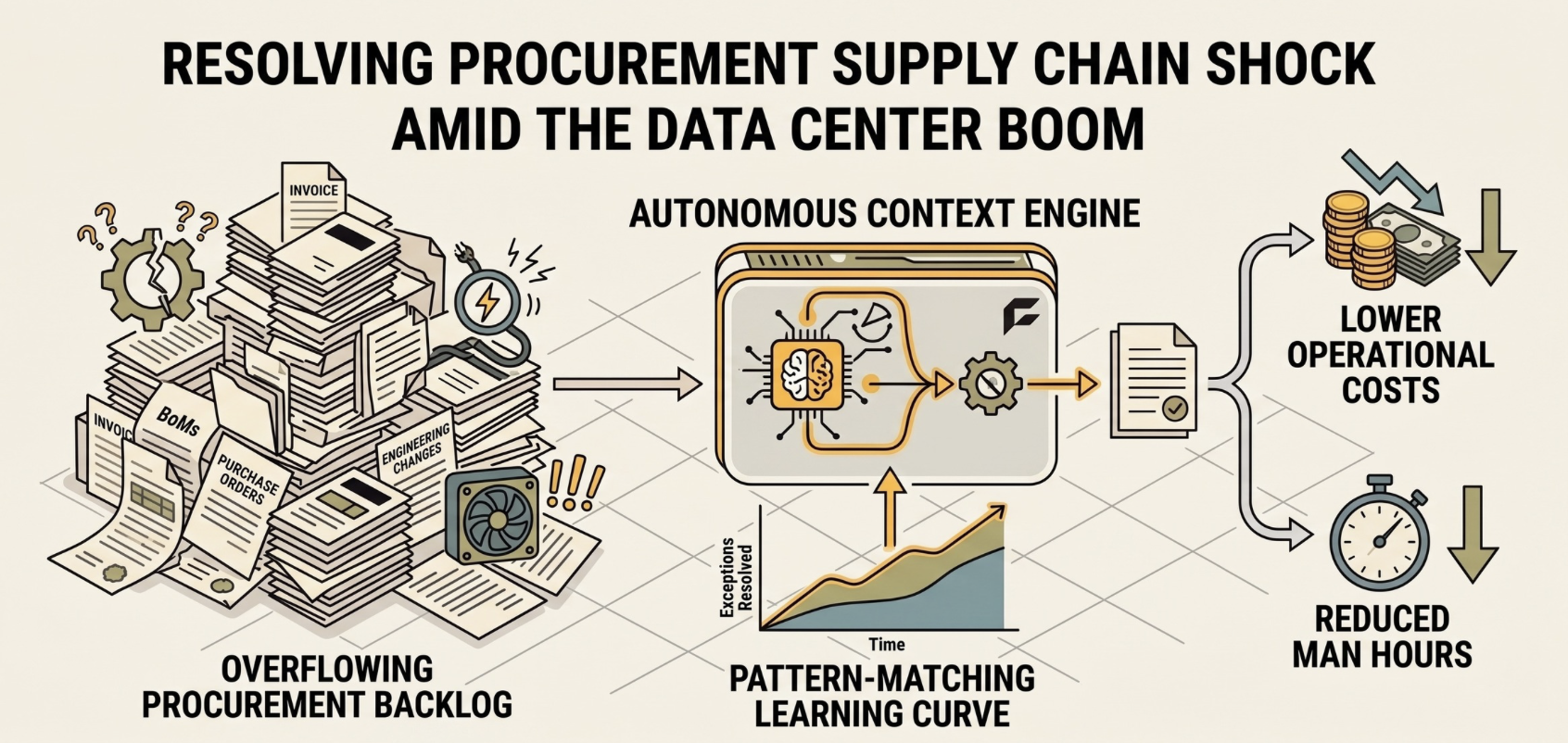
I think the same principle applies to something most enterprise leaders deal with every day: operational workflows. Specifically, the BPO and GBS workflows that run procure-to-pay, hire-to-retire, and everything in between. Many AI founders are targeting these workflows with automation. In general, it makes sense. They're repetitive, high-volume, SOP-driven. But simply automating the workflow as it exists today is the wrong approach.
Here's what I mean. Consider a $10M revenue factory in Indianapolis. One person, Joe, handles the full P2P cycle. Joe picks the supplier, places the order, receives the goods, checks the invoice, and pays the vendor. When something doesn't match or something goes wrong, Joe knows why. There's no exception ticket or queue of problems. He's actively managing every procurement process in the factory so he has context for everything.
When a company scales, you have to change the organizational design so you don't throttle the business. You split the work into discrete roles: purchasing analyst, buyer, AP analyst. Each person handles a piece of the workflow that used to be done by one person. Shared services centralizes those roles. GBS reorganizes them into horizontal end-to-end workflows like procure-to-pay and hire-to-retire, creating clear process ownership and reducing the dysfunction of siloed teams. BPO layers on labor arbitrage to make the whole thing cheaper.
Each step made sense. But each step also stripped away a layer of context that made Joe so effective.
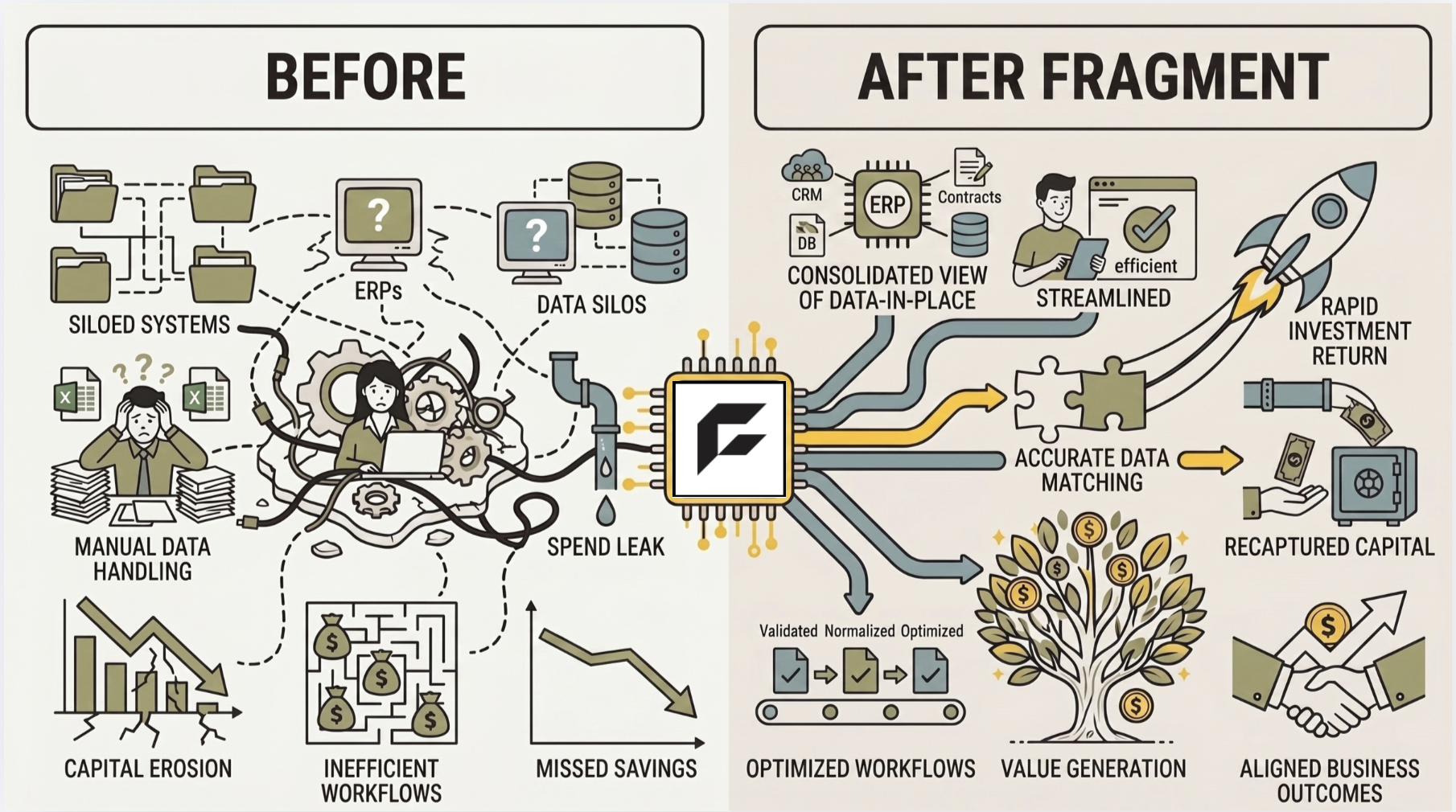
So at a $5B enterprise running a GBS model, a single procurement transaction can touch five teams across five countries. Procurement in Chicago, PO creation in Krakow, receiving in Guadalajara, AP in Manila, treasury in London. The same price discrepancy that used to take Joe a 10-minute phone call is now a 2-week cross-functional investigation. The context gap gets filled with Teams messages, email chains, and operational overhead.
The numbers bear this out. The average enterprise AP organization has a 22% invoice exception rate. Over 60% of invoices still require human intervention. And most of those exceptions don't even originate in AP. Price discrepancies trace back to procurement. Receiving failures trace back to the warehouse. AP is where the problem surfaces, not where it starts. The exception rate isn't a measure of process complexity. It's a measure of how much context was lost when the work got distributed.
With AI, you can scale the context instead of fragmenting it. Instead of organizational design forcing discrete compartmentalization of knowledge, you can have a thousand Joes. Each one with full visibility across the procurement chain, the contract terms, the receiving records, the supplier history. That's not automating the BPO. That's solving the problem the BPO was never equipped to solve.
This is what Botha and Dorsey are getting at with Block: when AI carries the context, the layers that existed to route information become unnecessary. The same is true for enterprise operations. The GBS solved the cost problem by distributing the work. AI solves the context problem by reunifying the knowledge.
More AI founders need to think along those lines. Don't automate the process as it exists. Understand where it came from, why it's organized the way it is, and what the best possible version of the solution actually looks like. Then build for that.
BACK
What Block's Reorganization Gets Right – and What Enterprise AI Gets Wrong

Pranav Mulgund
Apr 1, 2026

Related articles
Insights
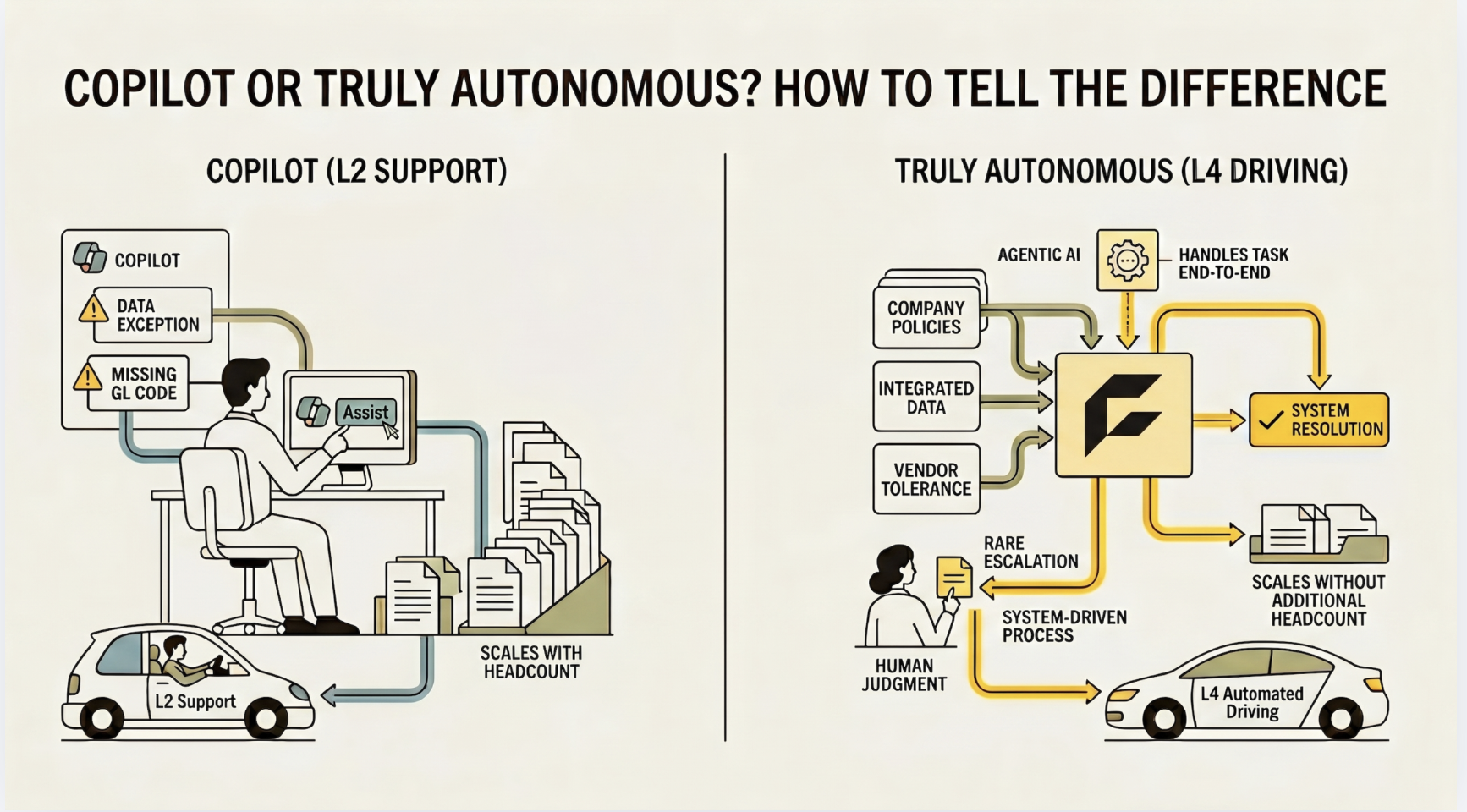
Copilot or Truly Autonomous? How to Tell the Difference
Almost every vendor now claims to be "autonomous." Most behave like copilots that flag an exception, suggest an answer, and hand the work back to a person. This piece breaks down the real difference between a copilot and a truly autonomous system in procurement, why it decides whether your exception queue ever shrinks or just moves faster, and a simple test you can run before you sign anything.

Joshua Kurian
Jun 30, 2026