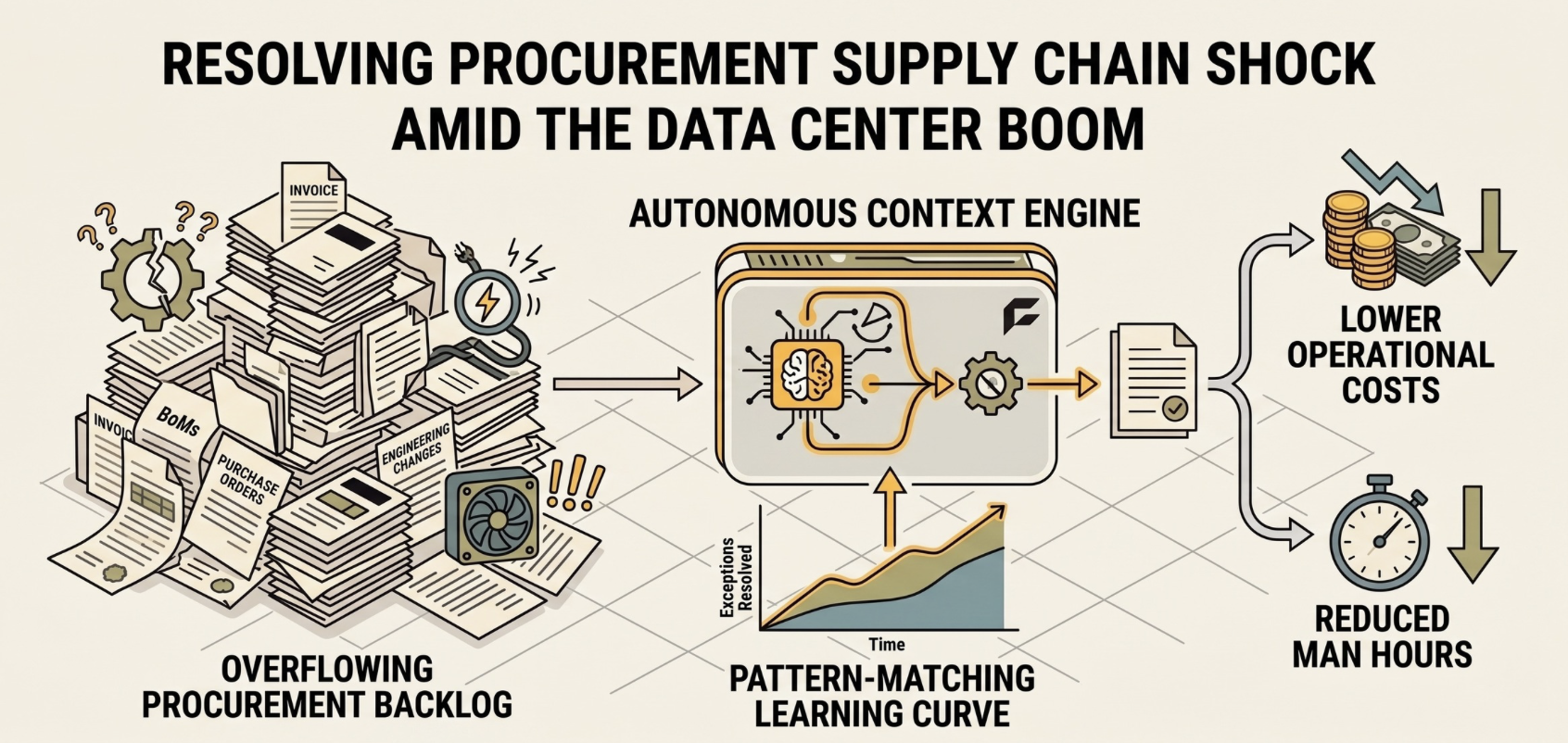
Operators are heading into 2026 with margins squeezed from several directions at once. Tariffs on steel, aluminum, and copper could raise material and service costs anywhere from 4% to 40% across the value chain, according to Deloitte's 2026 Oil and Gas Outlook. Long-lead equipment is still running 12 to 18 months out. About 40% of US oil country tubular goods came from foreign suppliers in 2024, which means the tariff exposure is real and meaningful.
When commodity prices stay range-bound and demand is uneven, an operator really has two levers. Sell more, or spend less. Most leaders right now are reaching for the second one.
That brings us to procurement, which is the lever with the most potential.
Two decades of transformation, same exception rate
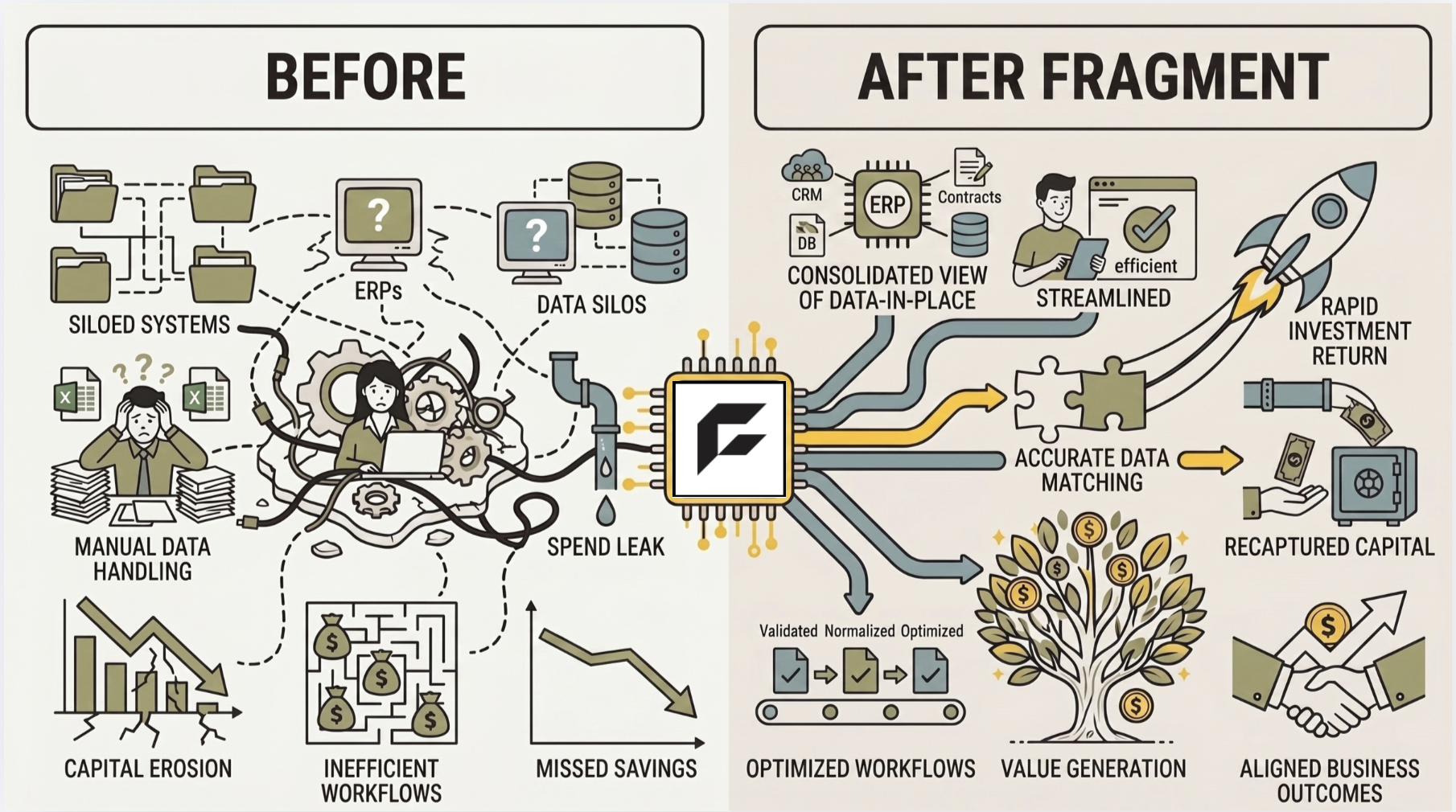
Direct spend in oil and gas is enormous and complicated. A single E&P operator runs thousands of vendors, hundreds of project codes, and dozens of systems that don't talk to each other. SAP over here. A Maximo or JD Edwards module over there. An Excel-based vendor master. A P2P suite bolted on in 2018 because the last one didn't work. Every year, billions of dollars flow through that stack as invoices, POs, contracts, and tribal knowledge.
And every year, a stubborn share of those invoices get stuck.
Ardent Partners' 2025 AP Metrics report puts the average invoice exception rate at 22%. Best-in-class teams sit at 9%. The average cost to process one invoice is $12.88; for top performers it's $2.78. The average AP team takes 17.4 days per invoice. The best take 3.1.
That gap is real money. For an operator processing a million invoices a year, the difference between average and top-quartile performance is roughly $10 million in processing cost alone, before you count working capital tied up in delayed approvals, missed early-pay discounts, or vendors putting you on credit hold because no one cleared an exception in time.
Here's the part nobody loves to admit: the industry has been buying procurement software, building shared services centers, and signing BPO contracts for two decades to fix this. And the average exception rate hasn't moved.
Misaligned incentives keep procurement stuck
It's worth asking why, because the answer changes what you do next.
The traditional play, when your procurement team can't keep up, is to add more humans. You grow the GBS team. You send overflow to a BPO. You bring in a consultancy to "transform" the process. That model has a quiet feature: everyone in it makes more money when the underlying work is messier. BPOs price per head. Consultancies bill by the hour. Software vendors sell seats, and seats grow when more people are needed to clear exceptions.
If your business gets cleaner, theirs gets smaller.
This isn't a conspiracy. It's an incentive structure. And it's why even operators with mature SAP environments and well-staffed shared services centers still report exception rates north of 20%, year after year, despite real money being spent on programs that promised otherwise.
The other reason is technical. Most of the tools in a procurement stack don't actually understand your business. They know what an invoice looks like. They don't know that "WBS-AB-7401" is the same project as "Anchor Bay 7" in three other systems, or that this particular supplier always invoices in dry tons while the PO is written in wet tons. That kind of context lives in the heads of two AP analysts who have been at the company for fifteen years. When they retire, the tribal knowledge walks out with them, and the exception rate ticks up another point.
Procurement should clear its own exceptions
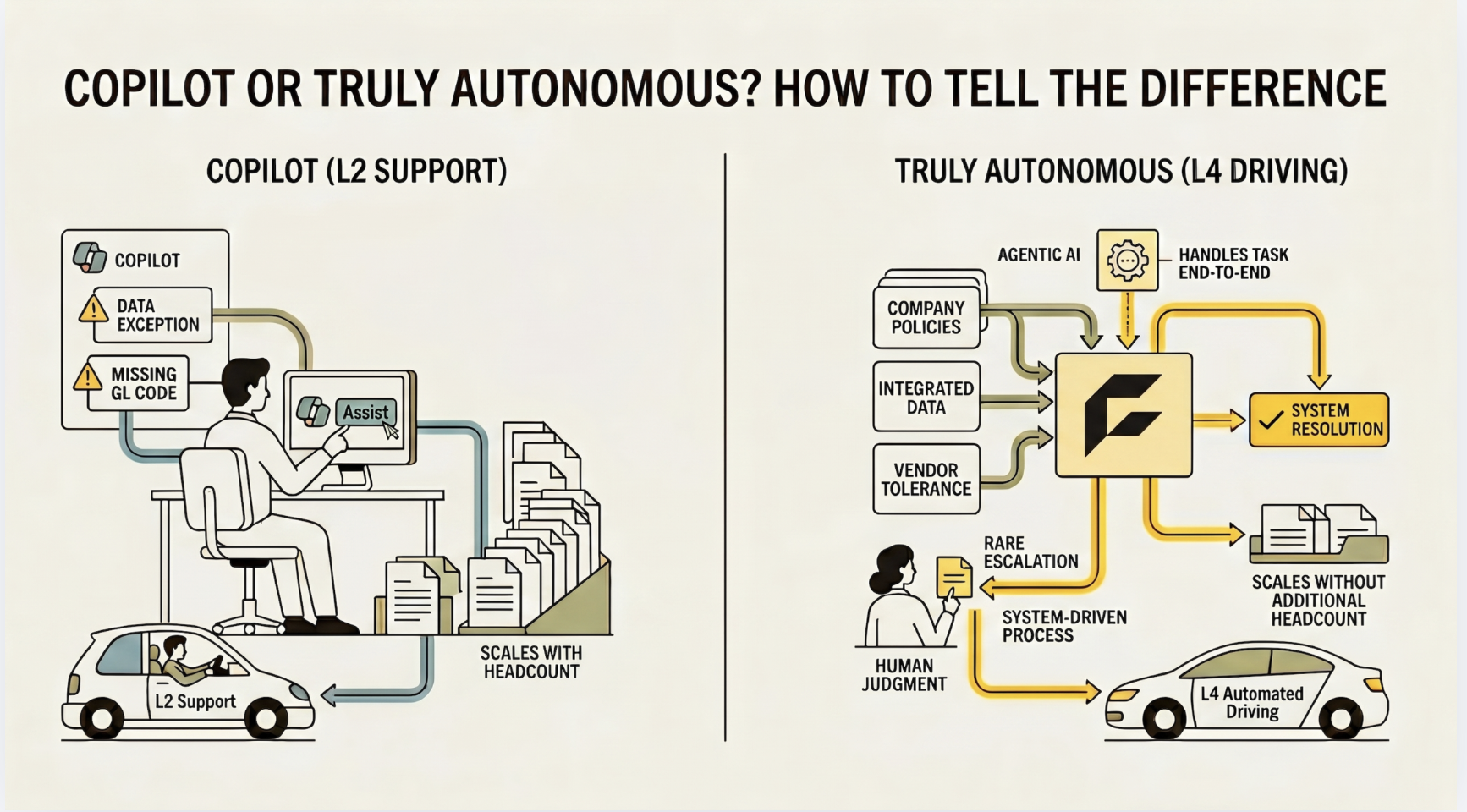
Picture procurement where the system already knows your vendors, your GL hierarchy, your project codes, your unit-of-measure conventions, and the dozen one-off rules that have accreted over the years. An invoice comes in with a quantity mismatch or a missing PO line. The system reads the surrounding context, finds the right answer, posts it, and moves on. No queue. No analyst pinged at 4pm on a Friday.
You stop paying per FTE for exception clearing. You stop measuring success in days-to-process, because that metric stops being interesting. The thing that matters is whether your spend is clean and your books close on time, and most of that takes care of itself.
The prize here is large. Rystad Energy projects that digital adoption across drilling, logistics, predictive maintenance, and a few other operational domains could unlock more than $320 billion in industry savings by 2030. Rystad's own analysts say that estimate is on the modest side. The numbers have been visible for a while. The reason most operators haven't captured them isn't lack of will.
It's that nothing in the existing toolkit was built to read context. Rules engines can't. RAG systems tend to hallucinate at exactly the wrong moment, when the answer actually matters. Every "AI-powered" P2P add-on still sends the hard cases back to a human queue. The hard cases are where the money is.
Software priced on resolved work flips the model
What's needed is a different approach to both pricing and technology, one that works alongside the systems you already run without ripping out or replacing anything. The technology has to absorb the tribal knowledge those systems don't capture: the unit conversions, the project aliases, the "this vendor always bills two weeks early" patterns long-tenured analysts carry around in their heads. The pricing has to be tied to work that actually gets finished, not work that gets generated for someone else.
That last part is where the model has to flip. Software priced per seat or per ticket has every reason to keep humans in the loop. Software priced on resolved work has every reason to make the loop disappear. The first model quietly rewards mess. The second one is the only one whose interests line up with yours.
That's what we built Fragment to do. If you're weighing this decision right now, we'll show you what autonomous exception resolution looks like on your actual data.